Exploring Nonliteral Language: Metaphors, Similes & Idioms

Master English figurative language by understanding metaphors, similes, and idiomatic expressions. Learn key examples, interpretation tips, and usage strategies.
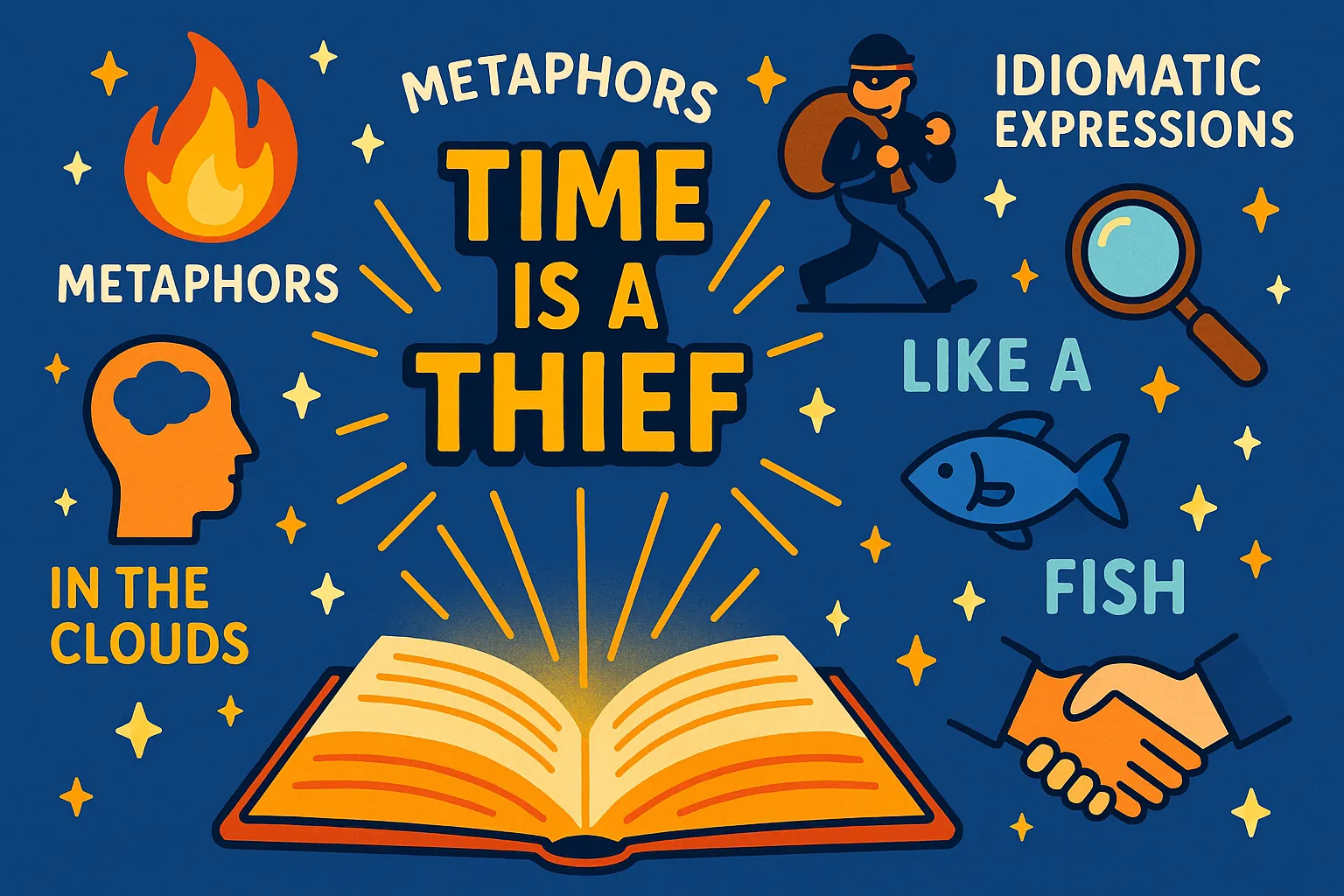
Exploring Nonliteral Language: Metaphors, Similes & Idioms
Figurative language is one of the most engaging features of English. Moving beyond direct statements, English speakers skillfully use metaphors, similes, and idiomatic expressions to add vividness and depth to their communication. This guide breaks down the mechanics, differences, and creative strategies for mastering nonliteral language in English.
What Is Nonliteral Language?
Nonliteral language, also called figurative language, uses words or expressions with meanings that differ from their literal definitions. These enrich communication by making it more colorful, evocative, and impactful.
Key Types of Figurative Language
- Metaphor: Directly compares two unrelated things by stating one is the other.
- Simile: Uses "like" or "as" to highlight similarities between two different things.
- Idiomatic Expression: Fixed phrases whose meanings are not deducible from the individual words.
Understanding and Forming Metaphors
Metaphors make descriptions more striking by equating two things:
- Time is a thief. (Time steals moments from our lives.)
- Her voice was music to his ears. (Her voice was pleasant.)
Formation tip: Identify a quality or emotion, then connect it to a strong image: 'His anger was a volcano.'
How Similes Work in English
Similes compare objects or ideas using connecting words like "as" or "like":
- She swims like a fish.
- His explanation was as clear as mud. (Irony implying it wasn't clear.)
Formation tip: Pair a descriptive quality with a "like/as" comparison: 'Runs as fast as lightning.'
Idiomatic Expressions: Meaning Beyond Words
Idioms are expressions whose meanings aren't directly related to the words used. They are deeply cultural and often challenging for learners:
- Break the ice — to initiate conversation in a social setting.
- Spill the beans — to reveal a secret.
- Kick the bucket — to die.
Note: Idioms often can't be translated word for word into other languages.
Metaphors, Similes, and Idioms: Comparison Table
| Feature | Metaphor | Simile | Idiom |
|---|---|---|---|
| Direct Comparison? | Yes (is/are) | Yes (like/as) | No |
| Literal Meaning Misleading? | Yes | Yes | Always |
| Fixed Phrase? | No | Usually not | Yes |
| Register | Creative, poetic | Descriptive, often informal | Colloquial, sometimes formal |
| Examples | "Life is a journey" | "Brave as a lion" | "Under the weather" |
Register and Context: When to Use Figurative Language
- Metaphors and similes are common in literature, speeches, and creative writing. They can be formal or informal.
- Idioms are frequent in everyday conversation. Some are informal, while others (like "state of the art") can fit formal registers.
Knowing your audience and setting helps you choose the right nonliteral expressions.
Strategies for Interpreting Figurative Language
- Look for context clues in the sentence or conversation.
- Ask yourself: Is the literal meaning logical here?
- Familiarize yourself with common English idioms and their meanings.
- Analyze imagery: What emotion or image is being conveyed?
Tips for Creative Use
- Experiment by making your own metaphors and similes about everyday experiences.
- Learn new idioms and practice using them naturally in conversation.
- Pay attention to figurative language in books, movies, and media to boost your understanding and fluency.
In summary, embracing nonliteral language unlocks new layers of meaning in English. Whether you’re reading, listening, or speaking, metaphors, similes, and idioms can bring greater richness, subtlety, and style to your communication.