From Text to Talk: Boost Your Spoken English

Learn how to transform your reading skills into confident, real-world English conversations with practical tips and creative practice.
From Text to Talk: Boost Your Spoken English
Are you great at reading English, but freeze up when it’s time to speak? You’re not alone! Many language learners find it easy to understand written English but struggle to turn that knowledge into comfortable conversation. The good news: you can bridge the gap by transforming your passive reading into active, spoken English. Let's dive into how!
Why Reading Alone Isn’t Enough
Reading is a powerful way to build vocabulary, pick up grammar, and discover everyday phrases. But conversation relies on recalling and using what you know—quickly and naturally. Speaking involves body language, listening, and improvisation, which reading alone doesn't practice.
Step-by-Step: Turn Reading into Real Conversation
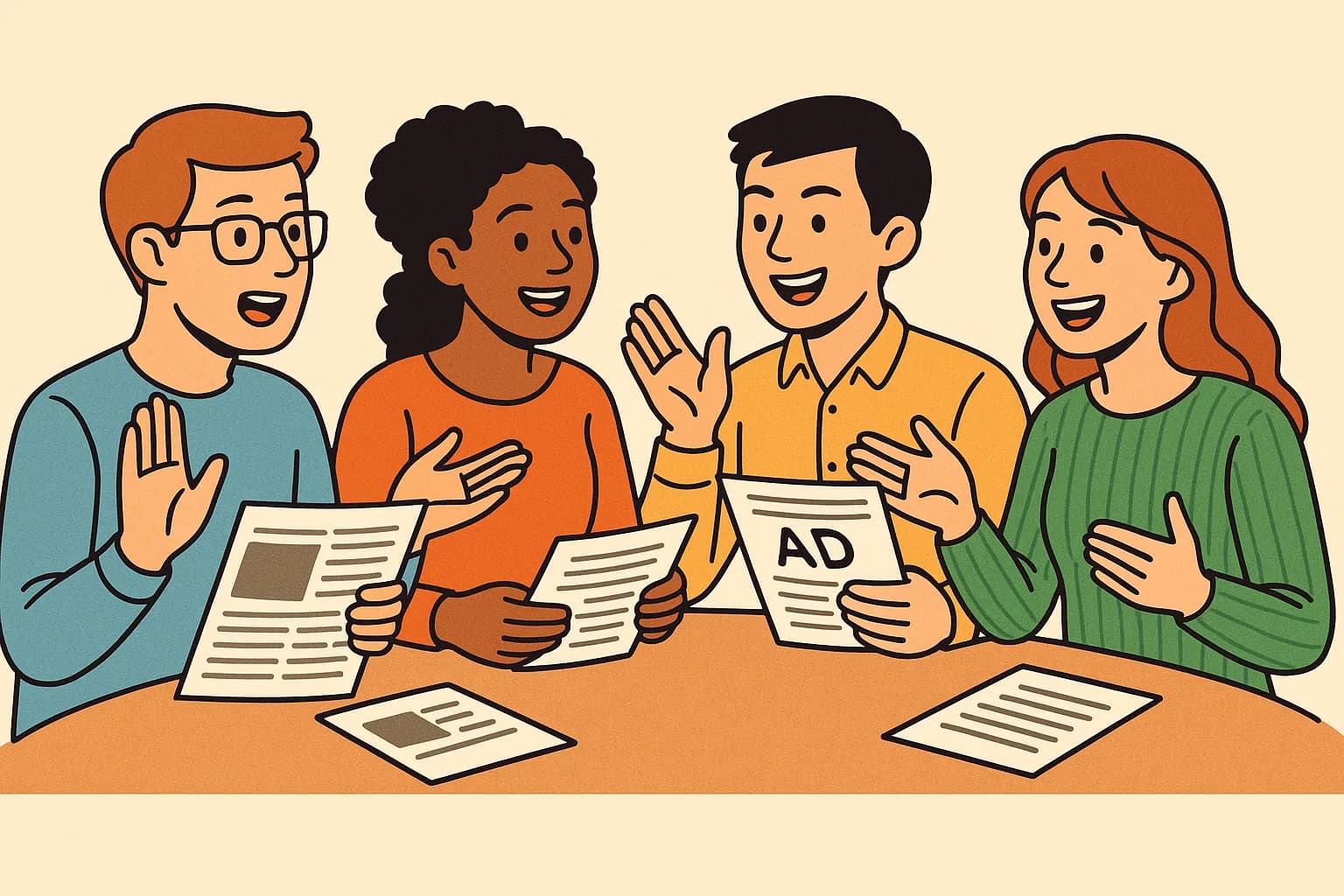
Here’s how you can convert what you read—like news headlines, ads, or even instructions—into spoken confidence.
1. Read Aloud: Make Texts Come Alive
- Why it works: Reading out loud connects written words with their sounds. You get used to your voice in English and start recognizing common pronunciation patterns.
- Tip: Don’t worry about mistakes! Focus on natural rhythm and expression.
2. Retell in Your Own Words
- Why it works: Summarizing or retelling helps shift from memorizing to communicating. Instead of repeating, you have to think and speak more flexibly.
- Tip: Start simple: “This ad is about…”, “The headline says…” Then add details or your opinion.
3. Improvise and Expand
- Why it works: Improvisation prepares you for real conversations, where you must respond and adapt on the fly.
- Tip: Imagine a conversation about the text. What questions might someone ask you? How would you answer?
Everyday Texts: Your Conversation Goldmine
Not sure where to start? Here are examples of real-life texts that make excellent practice material for improving spoken English:
| Source | Why It's Useful |
|---|---|
| News Headlines | Short, informative, great for summarizing and giving opinions |
| Advertisements | Simple, persuasive language that’s common in conversation |
| Instructions and Recipes | Instruction-giving is a vital speaking skill in daily life |
| Text Messages & Social Media | Modern, informal English you'll use with friends |
Practical Tips for Building Spoken Confidence
Consistency is key: Even 10 minutes a day will make a difference over time. Record and listen to yourself—a great way to spot improvement. Don’t just read for understanding—read for conversation.
Turning Passive Reading into Active Speaking: The Takeaway
Unlocking spoken English means blending reading with speaking practice. By reading aloud, retelling, and improvising with real-world texts, you’ll gradually turn passive knowledge into active confidence. Remember, every time you move from text to talk, you take a big step toward fluency. Happy speaking!