Intonation & Prosody: Mastering English Meaning

Explore how intonation, pitch, rhythm, and stress sculpt meaning and reveal intent in English conversations.
Intonation & Prosody: Mastering English Meaning
Intonation and prosody are the subtle, musical elements of spoken English that powerfully influence meaning. For learners and speakers alike, understanding these features unlocks nuance, emotional depth, and authentic communication.
What Are Intonation and Prosody?
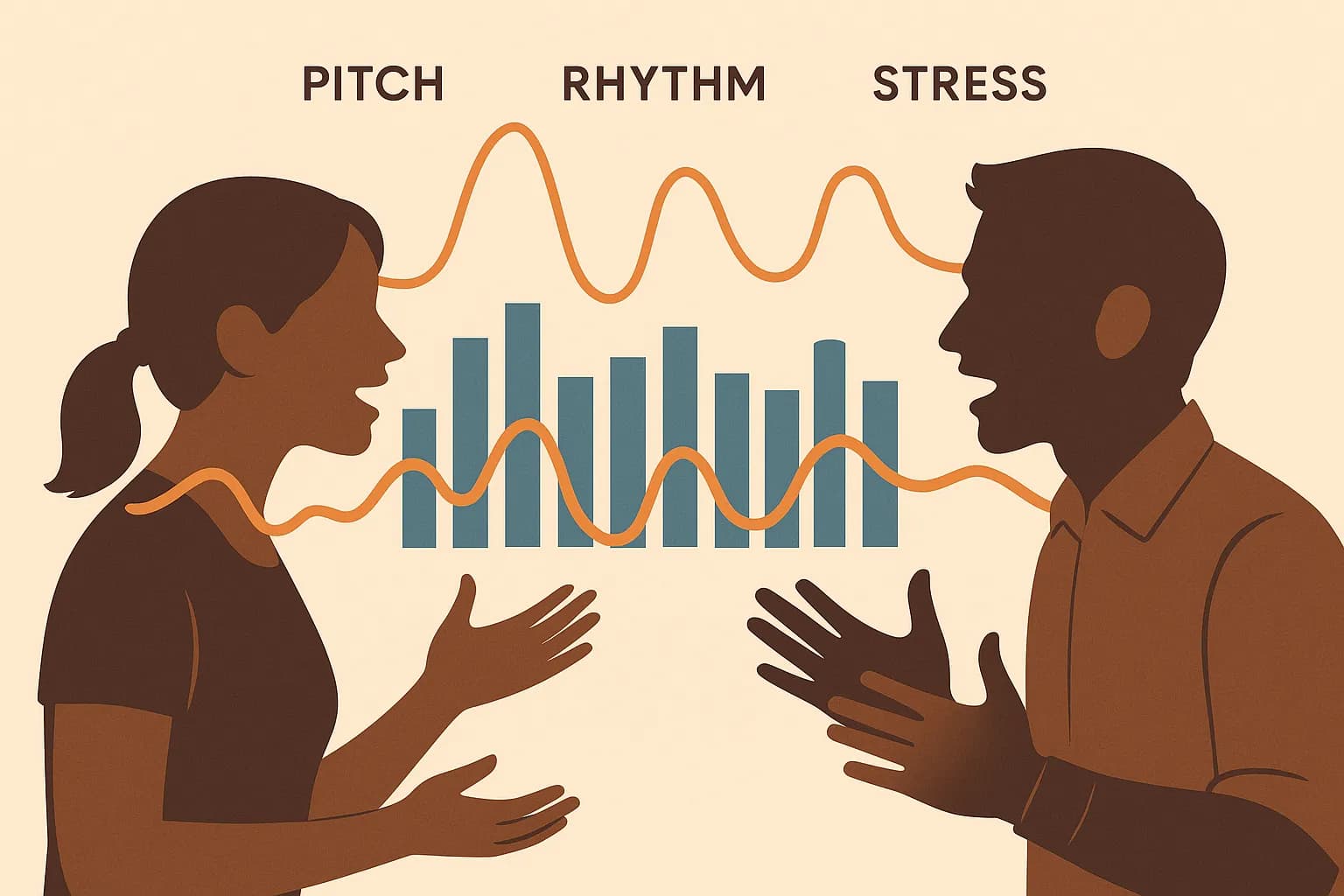
Intonation refers to the rise and fall of pitch as we speak, shaping questions, statements, or exclamations. Prosody is the broader musicality—encompassing pitch, rhythm, volume, and stress—that gives speech its flow, expressiveness, and emotional energy.
How Pitch, Rhythm, and Stress Shape Meaning
| Feature | Function | Example or Effect |
|---|---|---|
| Pitch | Distinguishes sentence types; conveys emotion | Rising pitch ("Really?") signals a question; falling pitch ("Really.") signals a fact or surprise |
| Rhythm | Establishes natural speech flow; highlights important words | Stressing content words, leaving function words softer: "She loves chocolate." |
| Stress | Changes meaning, creates emphasis | "I didn’t say he stole the money" (focus on he); "I didn’t say he stole the money" (focus on denial) |
The Impact on Communication
- Intent: Shifting intonation from rising to falling can turn a question into a command, or uncertainty into certainty.
- Emotion: Higher pitch and dynamic rhythm express enthusiasm or urgency; monotone signals boredom or detachment.
- Understanding: Misplaced stress may cause confusion or misinterpretation, affecting clarity and engagement.
Practical Ways to Tune Your Intonation and Prosody
- Listen attentively to authentic speech and mentally note how intonation conveys different emotions or attitudes.
- Record and compare your voice, paying attention to stress, pitch movement, and rhythmic patterns.
- Mimic expressive speakers, focusing on their use of contrastive stress and varied pitch for emphasis and clarity.
Conclusion: Intonation & Prosody—The Heartbeat of English
Mastering intonation and prosody adds vibrancy and precision to your English. These features do more than color your speech—they sculpt meaning, intention, and emotion, transforming simple words into rich, connected communication.