Introductory ‘There’ and ‘It’: Make Sentences Natural

Learn when and why to use impersonal ‘there is/are’ and ‘it is’ phrases in English, ensuring more natural, confident communication.
Introductory ‘There’ and ‘It’: Make Sentences Natural
Mastering English sentence structure means understanding not only what to say, but also how to present information naturally. Two of the most important tools for this are the impersonal constructions with ‘there’ and ‘it’. Recognizing when to use each—and why—is essential for clear, natural English.
What Are Impersonal ‘There’ and ‘It’ Constructions?
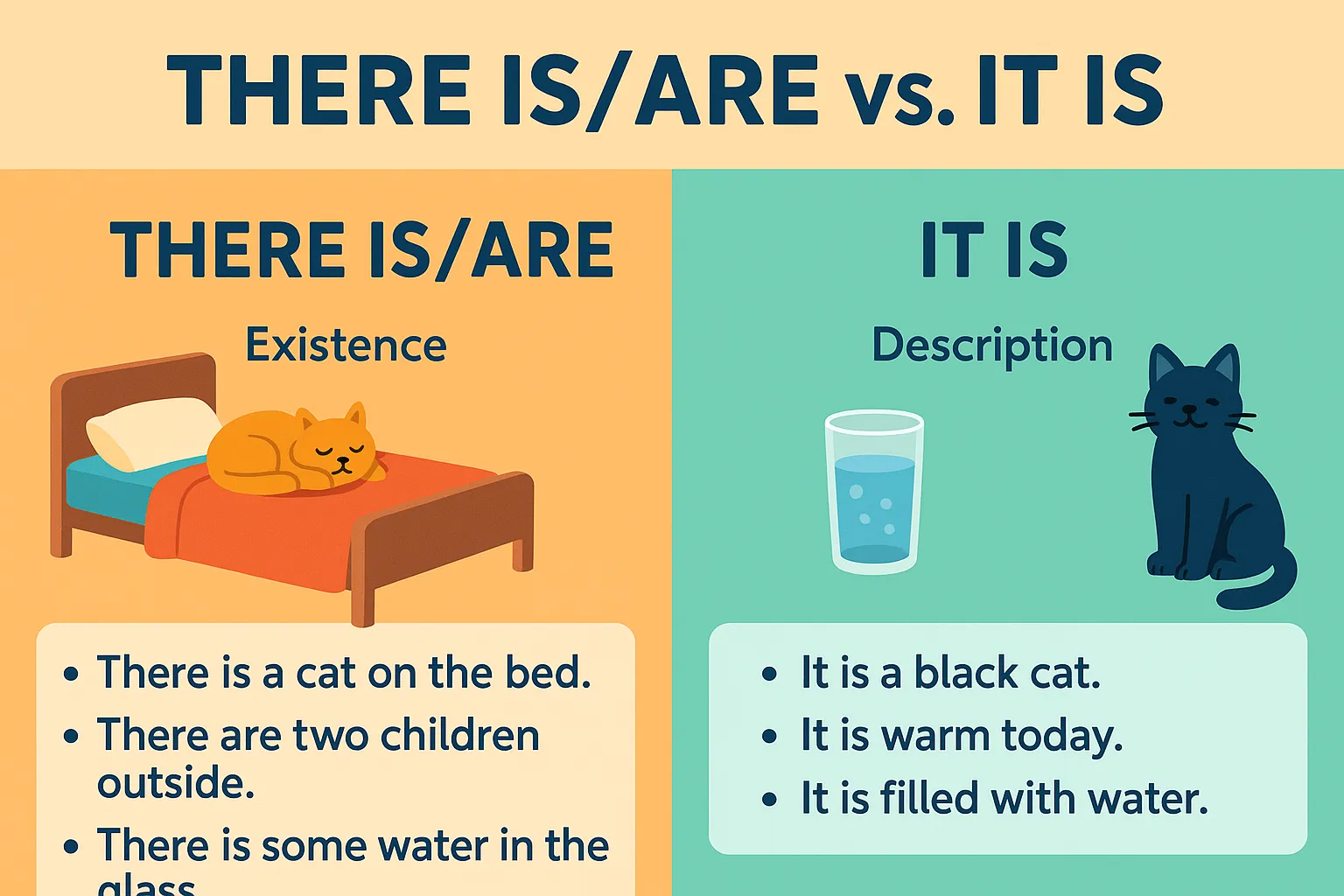
- Impersonal ‘there’: Used for existence or presence (There is a cat.)
- Impersonal ‘it’: Used for general statements, descriptions, time, and weather (It is raining. It is important.)
Both structures help focus on the message, rather than the subject.
How and When to Use ‘There is/are’
Use ‘there is/are’ when you introduce something for the first time, or point out its existence or presence. The real subject follows the verb:
- There is a book on the table. (A book exists on the table)
- There are three cups in the kitchen.
This structure is crucial when you don’t want to emphasize the subject but the existence of something.
How and When to Use ‘It is’ Constructions
‘It is’ takes the focus off the subject and is used for:
- Weather: It is sunny.
- Time: It is 5 PM.
- Distance: It is 10 miles to the city.
- Impersonal opinions/statements: It is important to listen.
Here, ‘it’ doesn’t refer to anything specific, but helps the sentence flow naturally.
Direct Sentences vs. Introductory Constructions
| Direct Construction | Impersonal ‘There’ | Impersonal ‘It’ |
|---|---|---|
| A cat is in the garden. | There is a cat in the garden. | – |
| Raining. | – | It is raining. |
| To speak English is easy. | – | It is easy to speak English. |
In spoken and written English, ‘there’ and ‘it’ constructions are more natural than direct statements.
Logic Behind the Constructions
- Use ‘there is/are’ to point out what exists or is present in a place or situation.
- Use ‘it is’ to describe general conditions, opinions, or facts—especially time, weather, distances, and impersonal statements.
This helps to organize information clearly for the listener or reader, matching natural patterns in English.
Real-Life Sentence Analysis
Consider these examples from everyday conversation and writing:
- There’s a problem with my phone. (Focus: the existence of a problem)
- It’s difficult to learn a new language. (Focus: a general statement, not who is doing it)
- There are many people at the concert. (Focus: the presence of people)
- It’s cold outside. (Weather description)
Using these impersonal constructions creates smoother, more native-like sentences.
Transform Your Sentences
As you practice, look at your sentences. Can you make your English more natural by using ‘there is/are’ or ‘it is’? Try to reframe direct statements into these impersonal forms for fluid, authentic speech.
Summary: Boosting Natural English
- Use ‘there is/are’ to state the existence or presence of something.
- Use ‘it is’ for general statements, weather, time, and opinions.
- Choose impersonal constructions for clear, native-sounding English.
By mastering ‘there’ and ‘it’ as introductory words, you’ll add clarity and confidence to your sentences every day.