Mastering Subtle English Politeness

Learn how to use modal verbs, indirect language, and tone to make English requests and instructions more polite—perfect for professional communication.
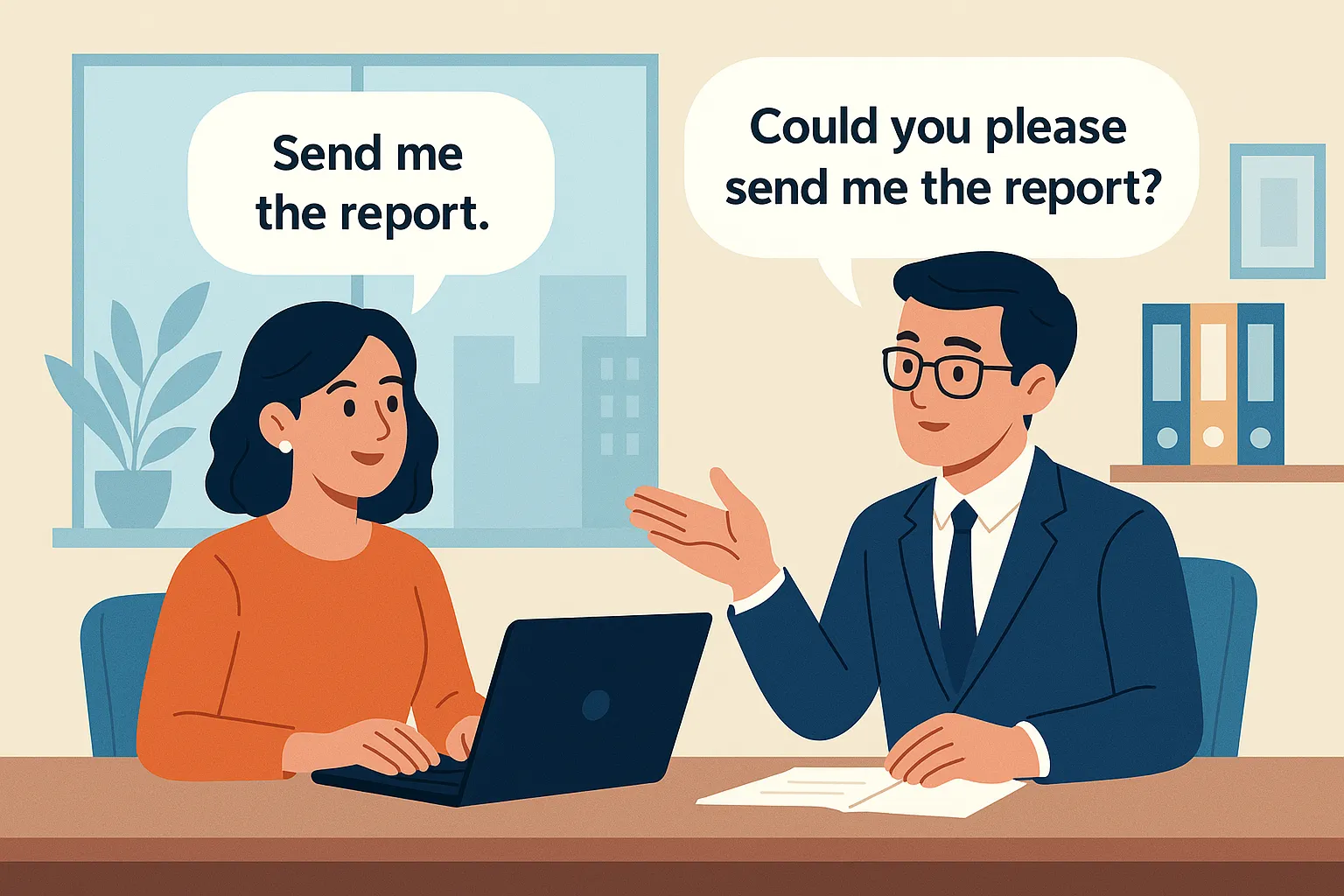
Mastering Subtle English Politeness: Softening Requests and Giving Instructions
Politeness is a crucial part of effective business communication. Mastering subtle English politeness helps you build rapport, show respect, and achieve your goals professionally—especially through emails and meetings. English speakers often soften requests and instructions using specific language tools, such as modal verbs, indirectness, mitigators, and intonation. Understanding how to use these strategies will elevate your communication in any formal setting.
Why Softening Matters in Professional English
Direct speech can seem blunt or impolite in English, even when intentions are friendly. Native speakers use subtle language to appear respectful, avoid sounding demanding, and encourage positive responses. Mastering these tools helps non-native speakers appear more diplomatic and polished, especially when giving instructions or making requests.
Key Language Tools for Softened Communication
- Modal Verbs: Words like could, would, and might add politeness and possibility.
- Indirect Language: Framing your request as a question or suggestion, not a command.
- Mitigators: Words or phrases that soften the impact (e.g., just, a bit, perhaps).
- Intonation and Tone: Using a gentle or rising tone in speech, or polite closing phrases in writing.
From Direct to Diplomatic: Frameworks and Examples
Transform direct sentences into polite English with these frameworks:
| Direct Expression | Professional Polite Upgrade | Framework |
|---|---|---|
| Send me the report. | Could you send me the report, please? | Could you + base verb + please? |
| I need the data by tomorrow. | Would it be possible for me to have the data by tomorrow? | Would it be possible for me to + verb + ? |
| Finish this task. | When you have a moment, could you finish this task? | When you have a moment, could you + base verb? |
| Don't forget the meeting. | Just a quick reminder about the meeting. | Just a quick reminder about... |
| Move your car. | I wonder if you could move your car. | I wonder if you could + base verb. |
Politeness Tools Explained: In-Depth
1. Modal Verbs
Modal verbs such as could, would, and might express possibility or willingness. This makes requests softer and more respectful.
- Can you → less formal
- Could you → more polite, preferred in business
- Would you mind → extra formal and very polite
2. Indirect Questions
Indirect questions avoid commanding tones and invite cooperation. Compare:
- Direct: Give me an update.
- Indirect: Could you give me an update when you have a chance?
3. Mitigators
Mitigators soften the force of requests or instructions. Common examples include:
- Just: "Could you just check this for me?"
- A bit: "Could the deadline be pushed a bit?"
- Perhaps: "Perhaps you could join the meeting?"
4. Intonation and Professional Closers
In speech, a gentle or rising tone sounds more tentative and friendly. In writing, add polite endings:
- "Let me know if you have any questions."
- "Thank you for your help."
- "I appreciate your support."
Comparison Table: Direct vs. Polite Professional Language
| Direct | Softened Polite Version |
|---|---|
| Send this now. | Could you send this when you have a minute? |
| I want this by Friday. | Would it be possible to get this by Friday? |
| Call me back. | Would you mind calling me back? |
Takeaway: Confident, Gentle Professional Speech
Mastering subtle English politeness is essential for modern business communication. Use modal verbs, indirect language, mitigators, and positive tone in every interaction—especially in emails and meetings. By upgrading direct instructions to gentle, professional requests, you build stronger relationships and achieve better results every time you communicate.