Parallel Structure: Building Balanced Sentences

Discover how parallel structure improves clarity, balance, and flow in your English writing with practical tips.
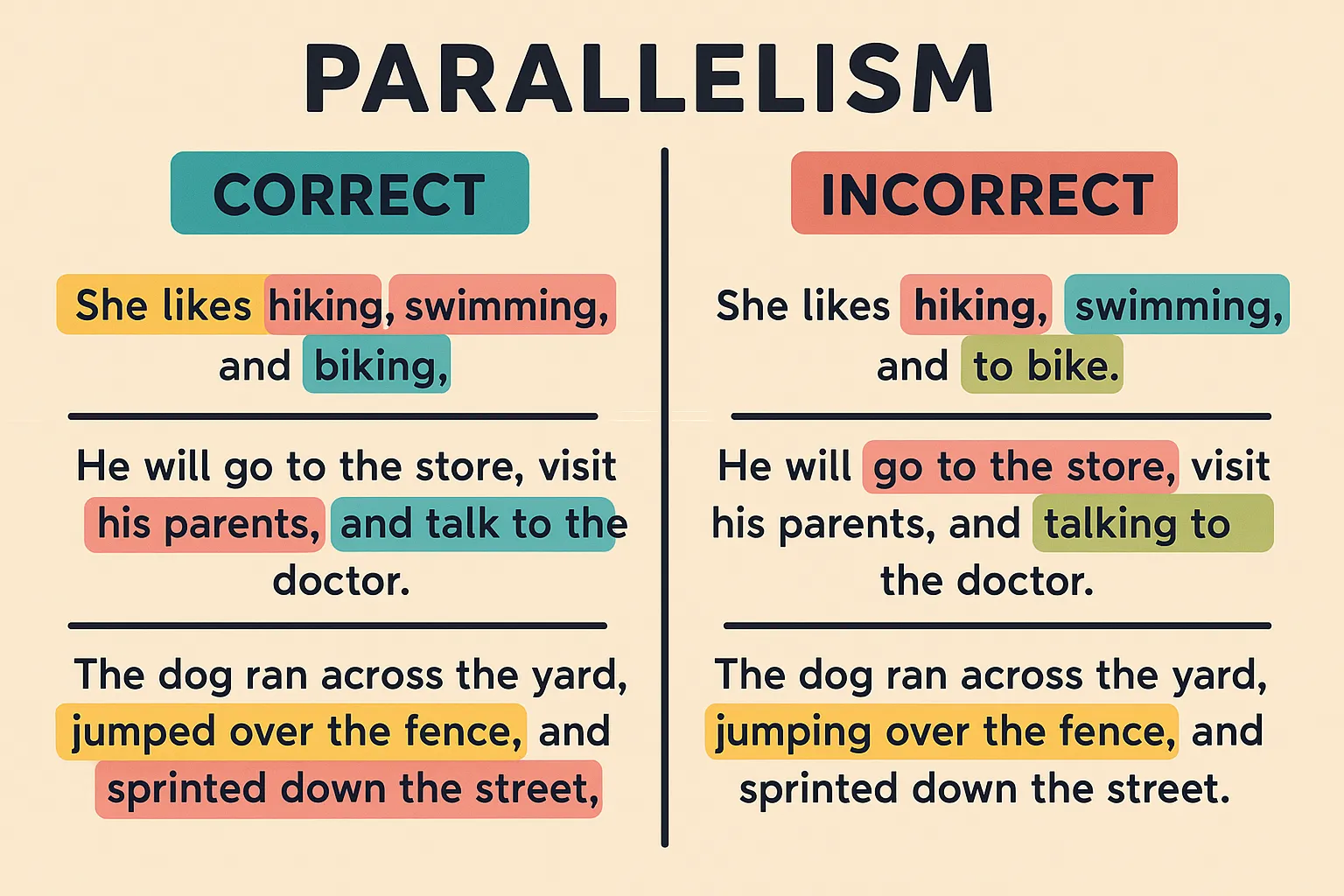
Parallel Structure: Building Balanced and Clear Sentences
Have you ever felt a sentence drag on or sound awkward, even though the words seem correct? The secret to fixing these problems often lies in parallel structure. Mastering parallelism not only makes your writing clearer and more professional, but also helps readers and listeners follow your ideas effortlessly. In this guide, you'll learn why parallel structure matters and how to use it to create clear, balanced sentences.
What Is Parallel Structure?
Parallel structure—or parallelism—means using matching grammatical forms when you present ideas in a series or list. This technique brings balance, rhythm, and clarity to your writing. Without parallelism, sentences can feel confusing or uneven.
Why Is Parallel Structure Important?
- Clarity: Parallel structure helps readers understand your meaning quickly.
- Fluency: Balanced elements make sentences easier and more pleasant to read or say.
- Cohesion: Parallel structure connects ideas, making your writing more persuasive and professional.
Where to Use Parallel Structure
- Lists and Series: When you present three or more items.
- Comparisons: When you compare or contrast items using words like "than" or "as."
- Compound Constructions: When you use phrases like "not only... but also," "either... or," and "both... and."
How to Build Parallel Sentences
To use parallel structure, make sure each element in a list or pair follows the same grammatical pattern. Here’s how:
- Verbs: Keep verb forms consistent.
Incorrect: She likes reading, to swim, and biking.
Correct: She likes reading, swimming, and biking. - Nouns: Use the same type of noun.
Incorrect: The job requires attention to detail, being creative, and responsibility.
Correct: The job requires attention to detail, creativity, and responsibility. - Clauses: Match the structure in each part.
Incorrect: He not only finished his homework but also the project was completed.
Correct: He not only finished his homework but also completed the project.
Common Errors and How to Avoid Them
| Error Type | Description | Example |
|---|---|---|
| Mixed Forms | Combining verbs, nouns, or adjectives inconsistently | Incorrect: He enjoys reading, to write, and painting. |
| Unmatched Clauses | Using different patterns in paired phrases | Incorrect: She wants to succeed and that she is happy. |
| Redundant Wording | Unnecessary repetition that breaks balance | Incorrect: The manager was not only strict but also he was demanding. |
Tips for Checking Parallel Structure
- Underline or list each element you are connecting.
- Check if they use the same grammatical form (verb, noun, clause).
- Revise non-matching elements for consistency and flow.
Conclusion: Bring Balance to Your English
Parallel structure is a powerful tool for building sentences that are easy to read, persuasive, and memorable. Whether you’re writing essays, emails, or preparing for exams, mastering this technique boosts your clarity and confidence. Ready to see the difference in your speaking? Try SpeakingAI today for feedback on your sentence structure and more!