Time Markers & Sequence Adverbs: Chronological Clarity

Master time markers, sequence adverbs, and narrative tenses for logical, chronological writing in English. Learn to organize information clearly and effectively.
Time Markers & Sequence Adverbs: Chronological Clarity
Presenting information in a clear, chronological order is critical for English writers and speakers. Whether you are telling a story, giving instructions, or writing essays, using time markers and sequence adverbs helps your reader or listener follow the flow of events easily. This guide will help you master these tools and arrange your ideas with logical accuracy.
Understanding Time Markers & Sequence Adverbs
- Time Markers: Signal the timing of actions (e.g., before, after, afterwards, earlier, later).
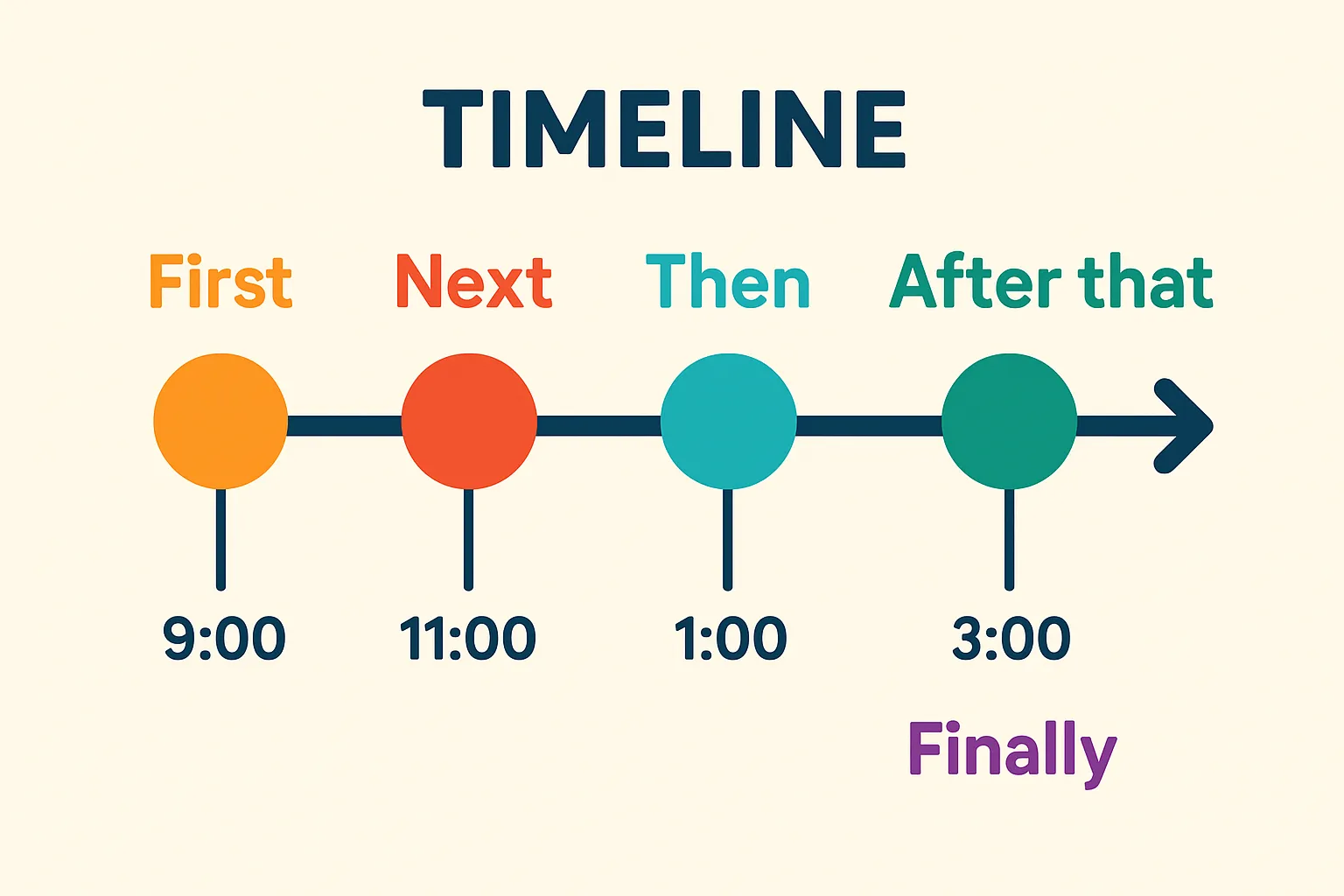
- Sequence Adverbs: Indicate the order in which steps or events occur (e.g., first, then, next, finally, eventually).
Using these consistently allows your writing to be coherent and easy to follow.
Key Sequence Adverbs & Time Markers (with Examples)
| Sequence Adverb / Time Marker | Example |
|---|---|
| First / Firstly | First, wash your hands thoroughly. |
| Before | Before you leave, lock the door. |
| Then / Next | Then, add the flour to the bowl. |
| After / Afterwards | Afterwards, we went home. |
| Later | Later, she called her friend. |
| Finally / Eventually | Finally, present your findings clearly. |
Chronological Organization in Different Contexts
- Narratives/Stories: Signal the succession of events ("Before he arrived, she had already prepared dinner. Afterwards, they enjoyed their meal together.").
- Instructions: Use sequence adverbs to clarify every step ("First, unlock the device. Next, press the power button. Then, follow the on-screen setup.").
- Essays: Guide readers logically through points and arguments ("Initially, the data appeared inconclusive. However, later analysis revealed clear patterns. Finally, the team drew its conclusions.").
Combining Markers with Narrative Tenses
Mixing time markers with the right verb tenses (past simple, past perfect, past continuous) ensures clarity about when each event happened:
- Past Perfect: For earlier events ("She had finished her work before he arrived.")
- Past Simple: For the main sequence ("She finished her work, then he arrived.")
- Present / Present Perfect: To discuss general truths or completed actions relevant now ("After you have read the book, write a summary.")
Mixing and Sequencing Narratives Accurately
Observe how time markers and sequence adverbs work together to clarify order:
- Example 1: "First, I woke up. Before breakfast, I checked my emails. Afterwards, I went for a run. Eventually, I started working."
- Example 2: "Initially, there was silence. Then, a distant sound grew louder. Later, everyone understood what it meant."
Tips for Achieving Chronological Clarity
- Be consistent: Use time markers and sequence adverbs regularly to guide your reader.
- Sequence logically: Arrange actions in order, using appropriate tenses and adverbs.
- Revise your writing: Check if events are clear and in the correct sequence.
- Vary your markers: Avoid repetition by mixing different adverbs and markers.
Mastering time markers and sequence adverbs is essential for anyone aiming to communicate their ideas with precision and clarity. Practicing these skills will result in writing and speaking that is logical, organized, and easy to understand.