Understanding Dummy Subjects in English

Learn when and why 'it' and 'there' are used as dummy subjects in English sentences, and avoid common learner mistakes.
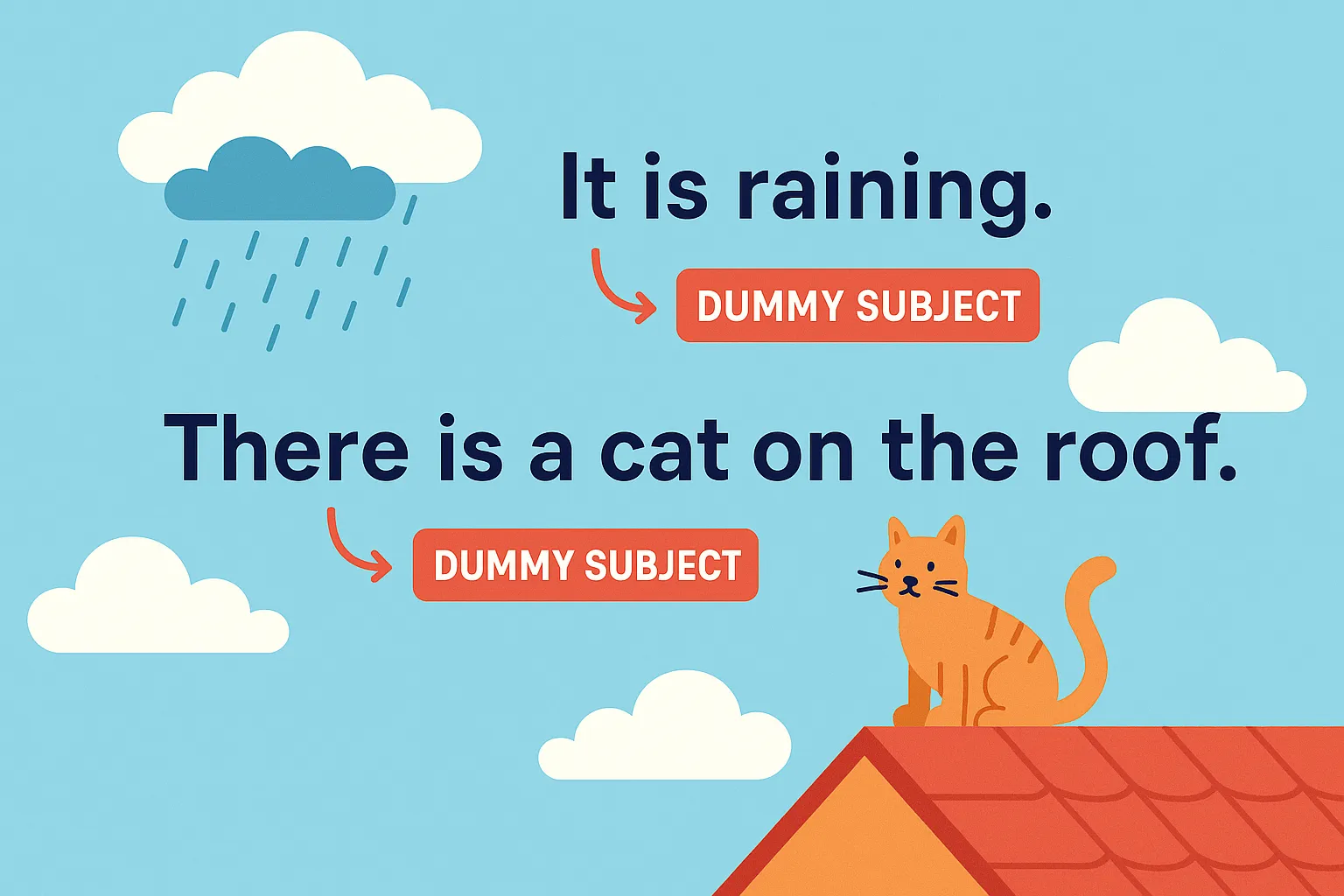
Understanding Dummy Subjects: When and Why to Use 'It' and 'There'
Ever wondered why English sentences like It is raining or There are three apples on the table start with words that seem to add no real meaning? These words, known as dummy subjects or empty subjects, play a special grammatical role. This guide will help you understand what dummy subjects are, when to use 'it' and 'there', and avoid common mistakes.
What Is a Dummy Subject?
In English grammar, a dummy subject is a word used as the grammatical subject, even though it does not refer to any person or thing. English requires every sentence (except for imperatives and some questions) to have a grammatical subject. Sometimes, there is no “real” subject to use, so we insert 'it' or 'there' as place-holders.
| Real Subject | Dummy Subject Example |
|---|---|
| The cat | It is raining. |
| John | There are three mistakes. |
Why Are Dummy Subjects Necessary in English?
Many languages can make statements without a subject—English cannot. Dummy subjects fill the required subject slot, ensuring grammatical correctness, even when no true subject exists.
When to Use 'It' as a Dummy Subject
'It' acts as a dummy subject in several key patterns:
- Weather
It is snowing. / Is it cold outside? - Time
It is five o'clock. / It was late when they arrived. - Distance
It is ten miles to the nearest town. - Impersonal statements
It seems that you are right.
It is important to study this.
In each case, 'it' does not refer to anything specific: it is simply required by English grammar.
When to Use 'There' as a Dummy Subject
'There' introduces information about the existence or presence of something:
- Existential Sentences
There is a cat on the roof.
There were problems with the machine. - 'There' is often followed by a form of be (is, are, was, were, etc.) and the actual subject comes after.
Dummy Subjects vs. Real Subjects
| Dummy Subject | Real Subject |
|---|---|
| It is raining. | The sky is raining. |
| There are three guests. | Three guests have arrived. |
Notice how the dummy subject sentences allow English speakers to form correct statements without identifying a specific "doer" of the action.
Common Mistakes Made by Learners
For learners whose native languages don’t use dummy subjects, mistakes often include:
- Leaving out 'it' or 'there':
Is raining. (Incorrect)
Should be: It is raining. - Using a real subject when a dummy is needed:
The weather is raining. (Incorrect)
Should be: It is raining. - Misplacing 'there':
Are three people here. (Incorrect)
Should be: There are three people here.
Quick Reference: When to Use Each Dummy Subject
| Dummy Subject | Common Uses | Example |
|---|---|---|
| 'It' | Weather Time Distance Impersonal statements | It is sunny. It is 2pm. It is far. It seems likely. |
| 'There' | Existence or presence | There is a problem. There are many books. |
Summary: Mastering Dummy Subjects
Understanding dummy subjects like 'it' and 'there' is essential for English fluency. Remember: these words serve a grammatical, not a meaning, purpose when no logical subject is present. If you find yourself stuck, ask: “Does my sentence need a subject to be correct in English?” If yes, and you have none, a dummy subject is the answer!