Advanced Error Analysis: Overcoming Fossilized Mistakes

Discover effective strategies to identify, diagnose, and correct fossilized language errors for advanced English learners.
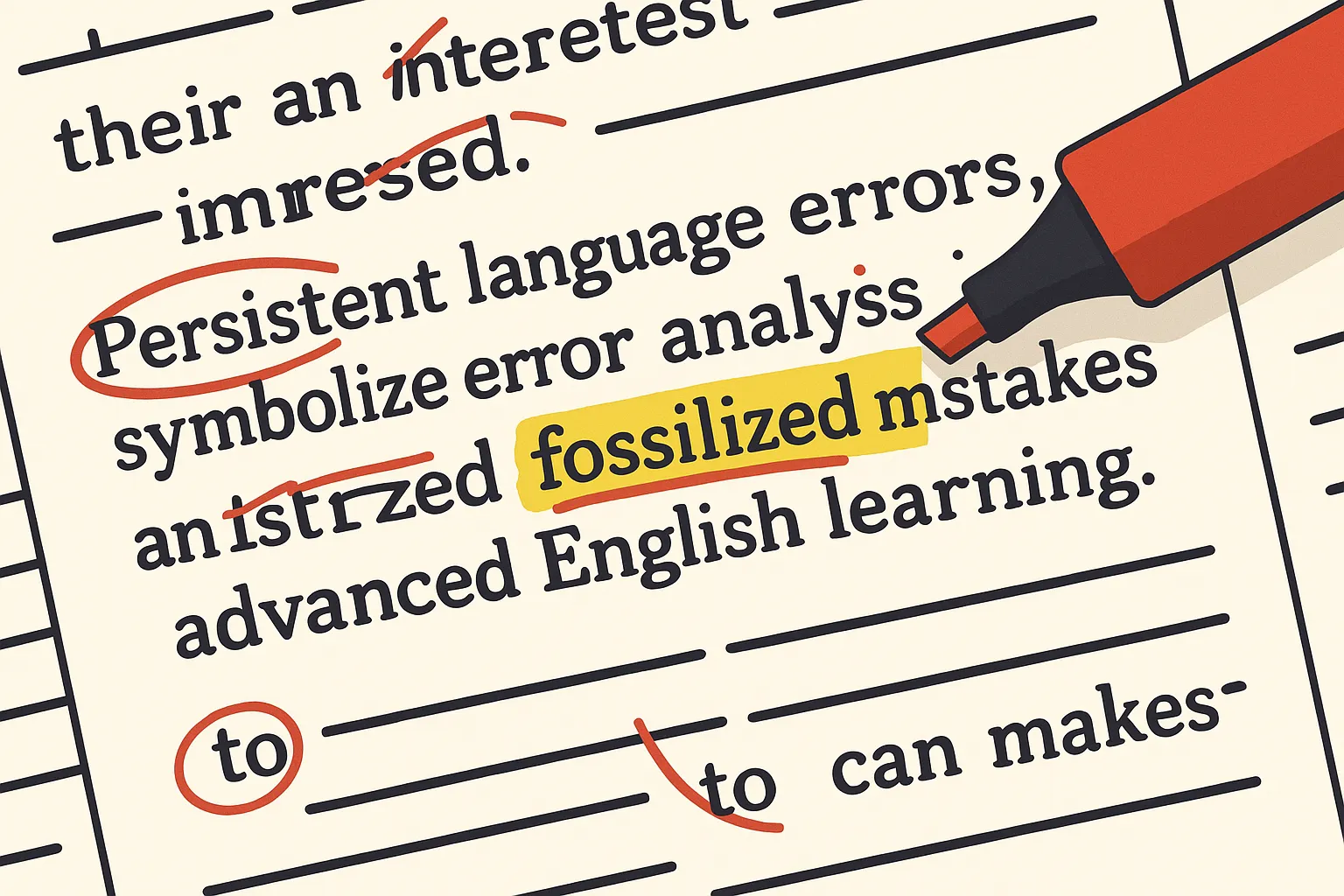
Advanced Error Analysis: Overcoming Fossilized Mistakes
Persistent mistakes at the advanced level can hinder real fluency. This in-depth guide introduces the concept of fossilization, common errors, and strategic remedies to help advanced learners reach native-like proficiency.
What Is Fossilization in Language Learning?
Fossilization refers to the process by which incorrect language forms become entrenched in a learner's interlanguage, resisting correction even after extensive study. These fossilized errors are especially prevalent among experienced learners who function comfortably in English, yet make the same recurring mistakes.
Characteristics of Fossilized Errors
- Persist despite correction or feedback
- Appear in both spoken and written English
- Often relate to deeply ingrained grammatical structures, pronunciation, or collocation
- May be unnoticed by the learner ("blind spots")
Common Examples Among Advanced Learners
| Error Type | Typical Fossilized Examples |
|---|---|
| Prepositions | "married with" instead of "married to" |
| Article Use | Omitting "the" before unique nouns (“sun rises in east”) |
| Verb Tense | "I have seen him yesterday" instead of "I saw him yesterday" |
| Pronunciation | /θ/ vs /s/ in "think" vs "sink" |
Why Do Fossilized Errors Persist?
- Comfort with current language skills reduces motivation to self-monitor
- Lack of corrective feedback in daily interactions
- Transfer from native language structures
- Automated language use—habits become subconscious
Diagnosing Fossilized Mistakes: Methods and Tools
- Recording and Self-Observation: Regularly record your speech or writing to spot recurring errors.
- Peer Review: Collaborate with advanced peers or tutors for detailed feedback.
- Error Journals: Maintain a log of errors and corrections to visualize patterns.
- Contrastive Analysis: Compare tricky English structures to your native language to uncover persistent transfers.
Targeted Remedies to Unlearn Fossilized Habits
- Focused Practice: Deliberately practice problematic structures in varied contexts.
- Metalinguistic Awareness: Study the underlying rules behind frequent mistakes to shift your perspective.
- Immediate Correction: Seek real-time correction—self-correction or from a knowledgeable interlocutor.
- Repetition with Reflection: Revisit and actively reflect on corrected forms until new habits emerge.
- Mindful Listening and Reading: Expose yourself to native usage and analyze why specific forms are chosen.
Transforming Fossilization Into Mastery
Overcoming fossilized errors demands self-awareness, targeted strategies, and sustained commitment. By combining diagnostics with focused remedies, advanced English learners can refine their skills, achieving an eloquence and accuracy that truly reflect their proficiency.