Exploring Pronoun Reference: Avoiding Ambiguity

Learn how to prevent confusion in English writing by mastering clear pronoun reference. Discover techniques that improve clarity and reader comprehension.
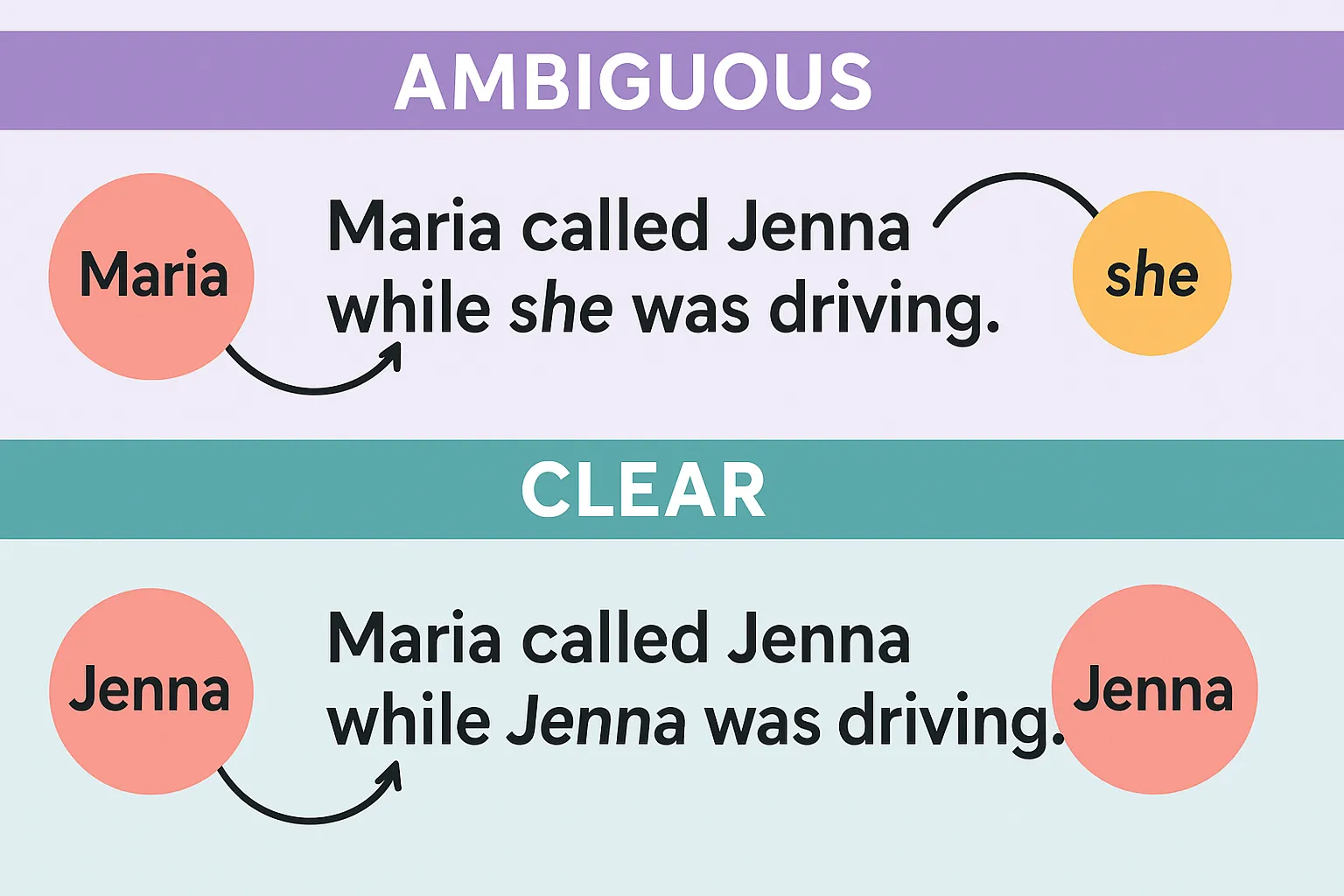
Exploring Pronoun Reference: Avoiding Ambiguity
Pronouns like he, she, it, they, and this are powerful tools for making writing less repetitive and more fluid. However, if used carelessly, pronouns can create confusion—especially in longer texts. This post examines how unclear pronoun reference arises, why it matters, and actionable strategies for maintaining clarity in your writing and speech.
Why Pronoun Clarity Matters
Pronouns replace nouns, but their meaning must always be clear to the reader or listener. Ambiguity occurs when a pronoun can refer to more than one possible noun (‘He told him that he was leaving’). This lack of clarity can hinder understanding and make communication less effective.
How Ambiguous Pronoun Reference Happens
- Multiple Candidates: When two or more nouns of the same gender/number have been introduced, a pronoun may refer to any of them.
- Distance: If the antecedent (the word a pronoun refers to) is too far back in the text, the connection becomes unclear.
- Unclear Context: Pronouns like this, it, or they can sometimes refer to actions, situations, or objects that haven’t been clearly defined.
| Ambiguous | Why? |
|---|---|
| After John met Peter, he went home. | Who is "he"? |
| Sara gave Jenny her notes. | Whose notes? |
| The team congratulated the coach because they won. | Who won—team or coach? |
Strategies for Clear Pronoun Reference
- Repeat Key Nouns: If confusion is likely, restate the noun rather than always using a pronoun.
- Strategic Placement: Place pronouns as close as possible to their antecedents.
- Rephrase Sentences: Change the structure to remove ambiguity.
- Add Descriptive Details: Use modifiers ("the coach, who had trained them") to specify.
Real-World Example: Resolving Ambiguity
Ambiguous: Michael asked David if he could help with the report.
Clear: Michael asked David if David could help with the report.
Clear (alternative): Michael asked David, “Can you help me with the report?”
Practical Habits for Checking Pronoun Reference
- After writing, scan for all pronouns. Ask yourself: Is it crystal clear who or what each pronoun refers to?
- Read passages aloud. Ambiguity stands out more in speech.
- If there's any chance of confusion, reword or repeat the noun.
Conclusion: Make Clarity Your Priority
Pronouns are essential for fluent writing, but they should never leave your reader guessing. By paying careful attention to pronoun reference—through repetition, strategic wording, and critical review—you ensure your writing is both natural and clear.