Intensifiers & Downtoners: Shaping English Expression

Discover how intensifiers and downtoners like 'very' or 'somewhat' modulate meaning in English and boost your speaking and writing skills.
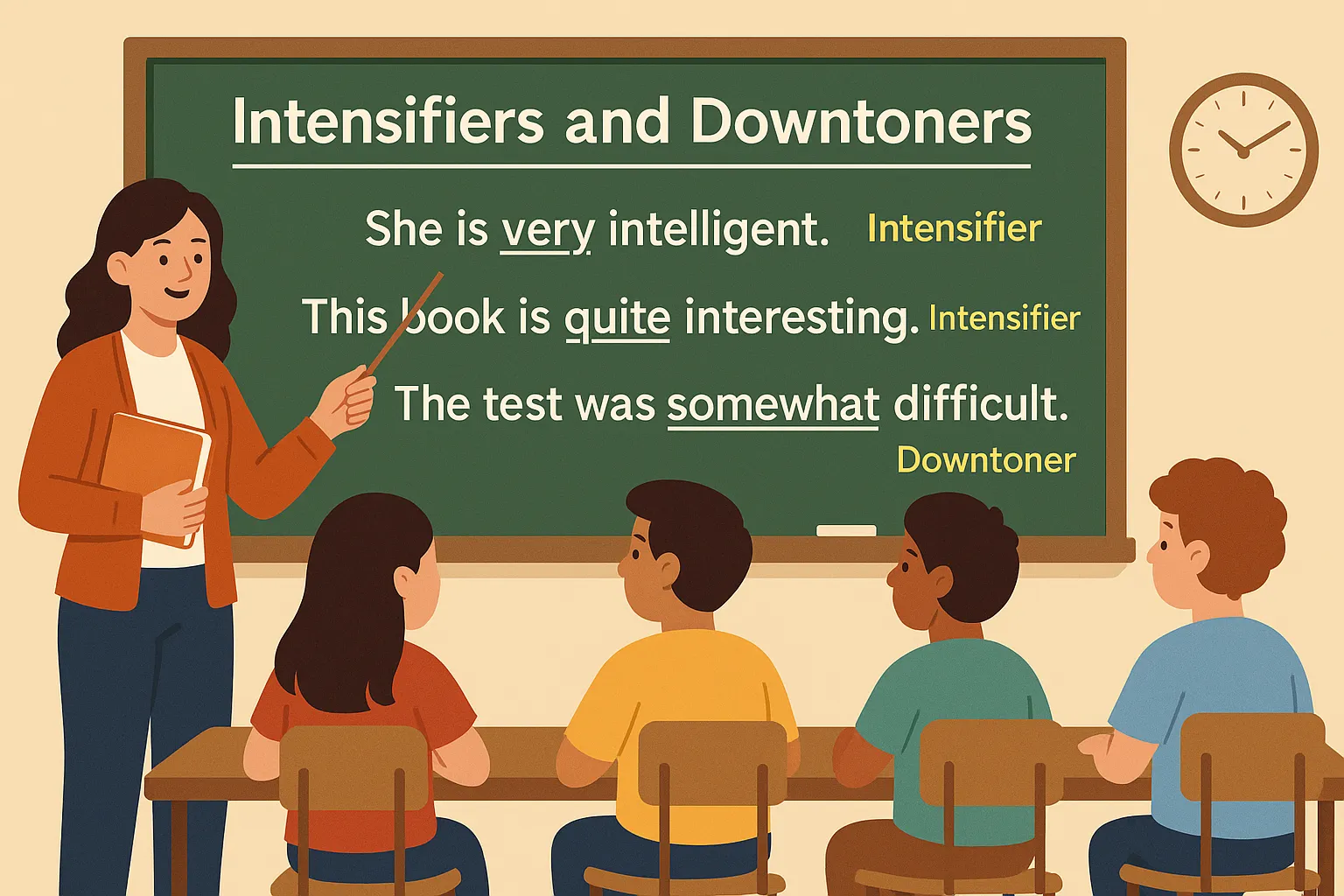
Intensifiers & Downtoners: Shaping English Expression
How do speakers of English make something sound stronger or softer? The secret often lies in a group of words known as intensifiers and downtoners. Understanding these modifiers is crucial for anyone who wants to communicate accurate shades of meaning and sound natural in English.
What Are Intensifiers and Downtoners?
- Intensifiers: Words that amplify or strengthen the meaning of adjectives and adverbs. Examples: very, really, so, extremely.
- Downtoners: Words that reduce or soften the impact of adjectives and adverbs. Examples: quite, fairly, rather, somewhat.
How Intensifiers and Downtoners Shape Meaning
By adding these small yet powerful words, speakers can adjust the force of what they’re saying:
| Without Modifier | With Intensifier | With Downtoner |
|---|---|---|
| She is smart. | She is very smart. | She is somewhat smart. |
| It’s cold. | It’s extremely cold. | It’s fairly cold. |
Grammar: Placement and Sentence Structure
Both intensifiers and downtoners usually come directly before the adjective or adverb they modify:
- Intensifier: The movie was really interesting.
- Downtoner: The explanation was somewhat confusing.
Some, like so or such, require special structures:
- She was so tired that she fell asleep instantly.
- It’s such a beautiful day.
Collocation Patterns: What Goes with What?
Not every modifier works with every word. Certain intensifiers and downtoners have natural partners—these are called collocations:
- Highly is common with positive adjectives: highly recommended, highly effective.
- Absolutely works with "extreme" adjectives: absolutely fantastic, absolutely terrible.
- Quite and rather are used with neutral or moderate adjectives: quite nice, rather dull.
Common Pitfalls and Tips
- Overuse: Using too many intensifiers (very, really, so) can weaken your writing and make it sound emotional or unprofessional.
- Wrong Pairing: "Absolutely" + "good" is incorrect (say "absolutely wonderful"). Stick to natural collocations.
- Regional Differences: In British English, quite often means "fairly," but in American English it usually means "very."
- Subtle Shades: Somewhat and fairly both soften meaning, but somewhat is gentler.
Conclusion: Mastering Subtlety in English Expression
Intensifiers and downtoners let you express exactly how much or how little you feel or observe. Learn their patterns and use them judiciously for more precise, elegant communication.