Understanding English Stress and Intonation

Discover how English stress and intonation shape meaning, improve comprehension, and boost speaking confidence with simple tips for beginners.
Understanding English Stress and Intonation: A Guide for Beginners
English stress and intonation are keys to speaking naturally, being understood, and understanding others. If you often feel unsure about why some sentences sound different—or why stress changes meaning—you’re not alone. Mastering these basics will help you sound more confident and enjoy conversations.
What Are English Stress and Intonation?
Stress in English is the emphasis we give certain syllables or words. Intonation is the rise and fall of our voice as we speak.
- Word Stress: Always emphasize one syllable in every English word. For example: TAble, comPUter.
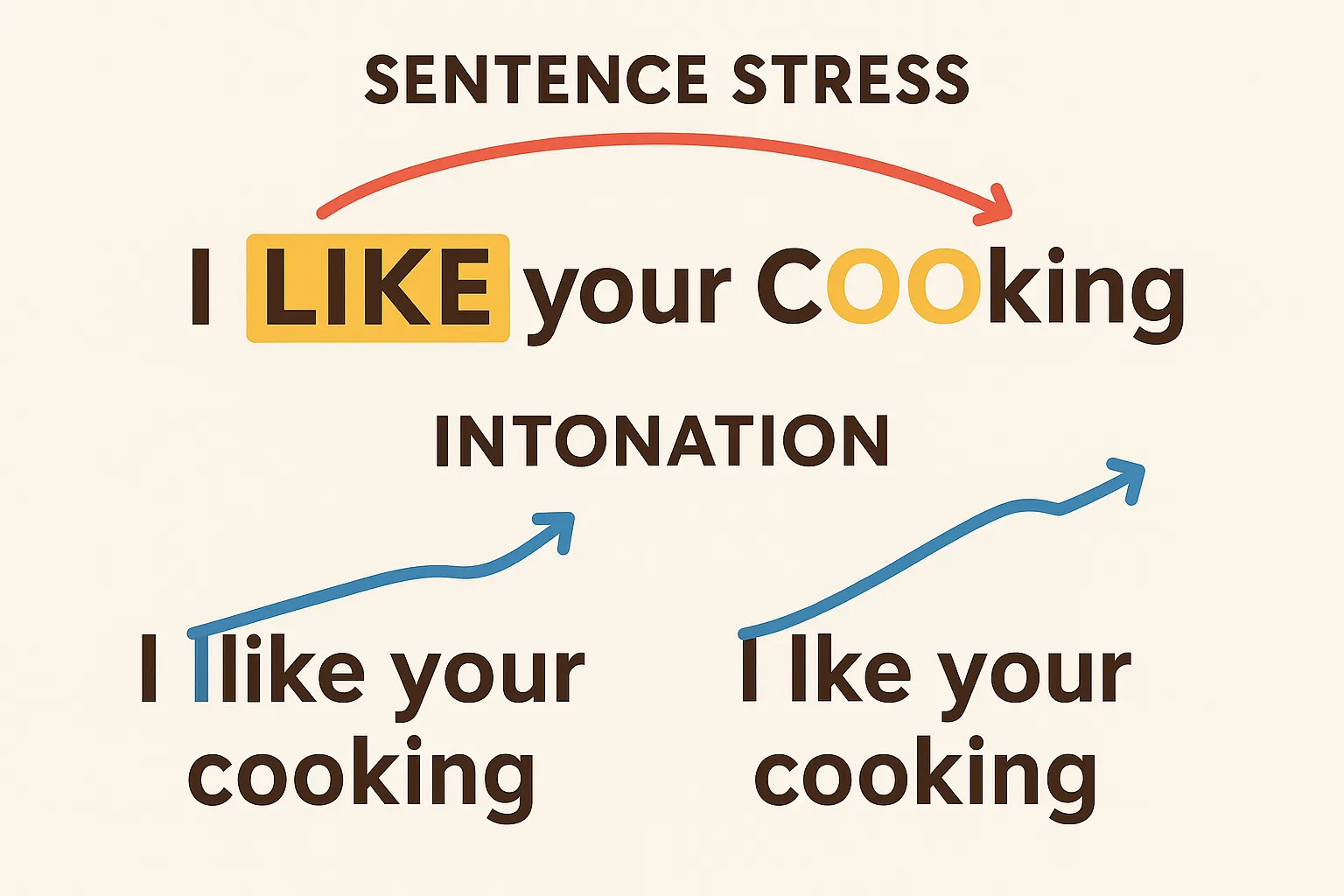
- Sentence Stress: Key words in sentences get stronger emphasis. For example: She loves chocolate.
- Intonation: Changes in pitch show questions, emotions, and meaning. A rising voice usually means a question. A falling voice often ends statements.
Why Does English Stress and Intonation Matter?
Using correct rhythm, stress, and intonation:
- Makes your speech clearer
- Prevents misunderstandings
- Improves listening comprehension
- Helps conversations flow naturally
Tips to Improve Your English Rhythm and Stress
- Listen carefully to natural speech—notice which words and syllables are stronger.
- Record yourself and compare with models. This helps you spot differences and improve.
- Break sentences into chunks. Stress content words (nouns, main verbs, adjectives) more than grammar words (is, the, at).
| Pattern | Example |
|---|---|
| Word Stress | PREtty, reLAX |
| Sentence Stress | I LOVE ice cream |
| Rising Intonation | Are you coming? |
| Falling Intonation | This is my friend. |
Visual Guide: English Intonation Patterns
Imagine intonation as a line that goes up or down:
- Upward line (↗): Yes/No questions
- Downward line (↘): Statements or Wh-questions
- Flat line (→): Lists or unfinished thoughts
Conclusion: Start Your English Speaking Journey
Understanding English stress and intonation makes every conversation easier and more enjoyable. These skills build your confidence and help others understand you. Ready to practice? Try out these tips with SpeakingAI and discover how simple—yet powerful— English rhythm can be.