Adjective Order in English: Why Do We Say ‘Big Blue Car’?

Master the correct order of adjectives in English, with a simple guide, detailed examples, and common mistakes to avoid.
Adjective Order in English: Why Do We Say ‘Big Blue Car’?
Have you ever wondered why we say “big blue car” but not “blue big car”? The answer lies in English’s unique adjective order—a rule that is second nature to native speakers but mystifying for many learners. This guide breaks down the logic, patterns, and tips you need to arrange multiple adjectives naturally and accurately.
Why Does Adjective Order Matter?
Adjective order isn’t random. Placing adjectives in the wrong order can make your sentence sound strange or even confusing. Mastering this rule will make your English sound more fluent and help your writing flow smoothly.
The Standard Adjective Order
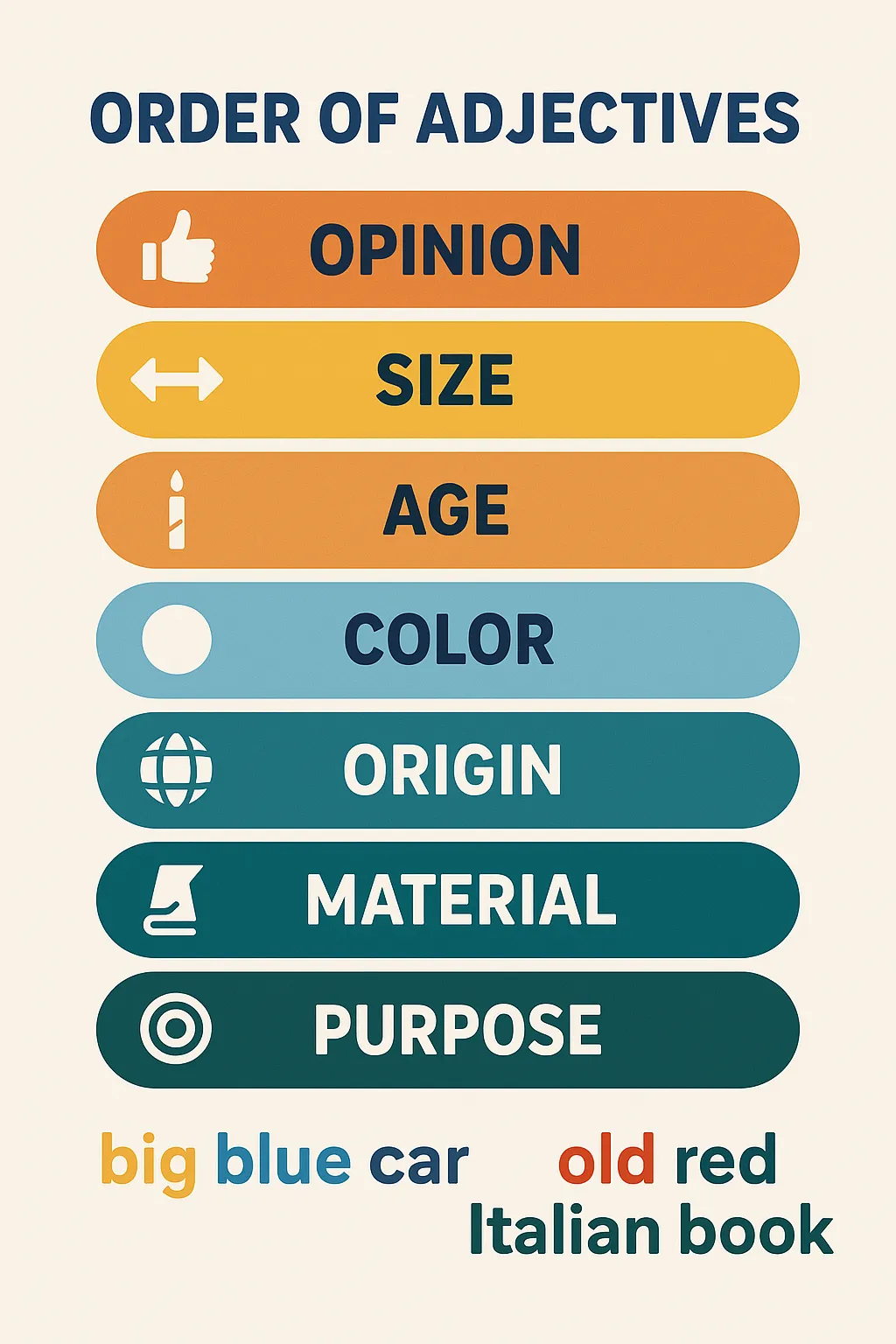
When using more than one adjective before a noun in English, they usually follow this strict sequence:
| Order | Type | Example |
|---|---|---|
| 1 | Opinion | beautiful, ugly, lovely |
| 2 | Size | big, small, tall |
| 3 | Age | old, new, modern |
| 4 | Shape | round, square, flat |
| 5 | Color | blue, red, green |
| 6 | Origin | French, American |
| 7 | Material | wooden, metal, silk |
| 8 | Purpose | sleeping (as in "sleeping bag"), racing |
The classic sentence structure looks like: Opinion ➜ Size ➜ Age ➜ Shape ➜ Color ➜ Origin ➜ Material ➜ Purpose ➜ Noun
Illustrative Examples
- A lovely little old round white French wooden dining table
- An elegant large modern square glass coffee table
- A beautiful small red Italian leather handbag
- A delicious big round chocolate birthday cake
Notice how placing the adjectives in a different order makes the phrase sound awkward.
Common Mistakes with Adjective Order
- Incorrect: She bought a wooden small old Chinese chair.
- Correct: She bought a small old Chinese wooden chair.
- Incorrect: He wants the French beautiful big car.
- Correct: He wants the beautiful big French car.
Tips to Master Adjective Sequence
- Limit the number of adjectives: Native speakers rarely use more than 2-3 adjectives in everyday speech.
- Memorize the core order: Opinion → Size → Age → Shape → Color → Origin → Material → Purpose.
- Practice with examples: Create your own phrases and rearrange adjectives for practice.
- Use intuition—but verify: If something sounds strange, check the order above.
Summary: Speak and Write Like a Native
Understanding adjective order in English will boost your confidence and fluency. Remember the standard sequence, use clear examples, and keep your phrases concise. With regular practice, adjective order will become automatic, helping you to sound more natural and correct—just like a native speaker.